Need help? 24/7
+2349056191443, +2347030695406
PROTOCOLS
Distinguished ladies and
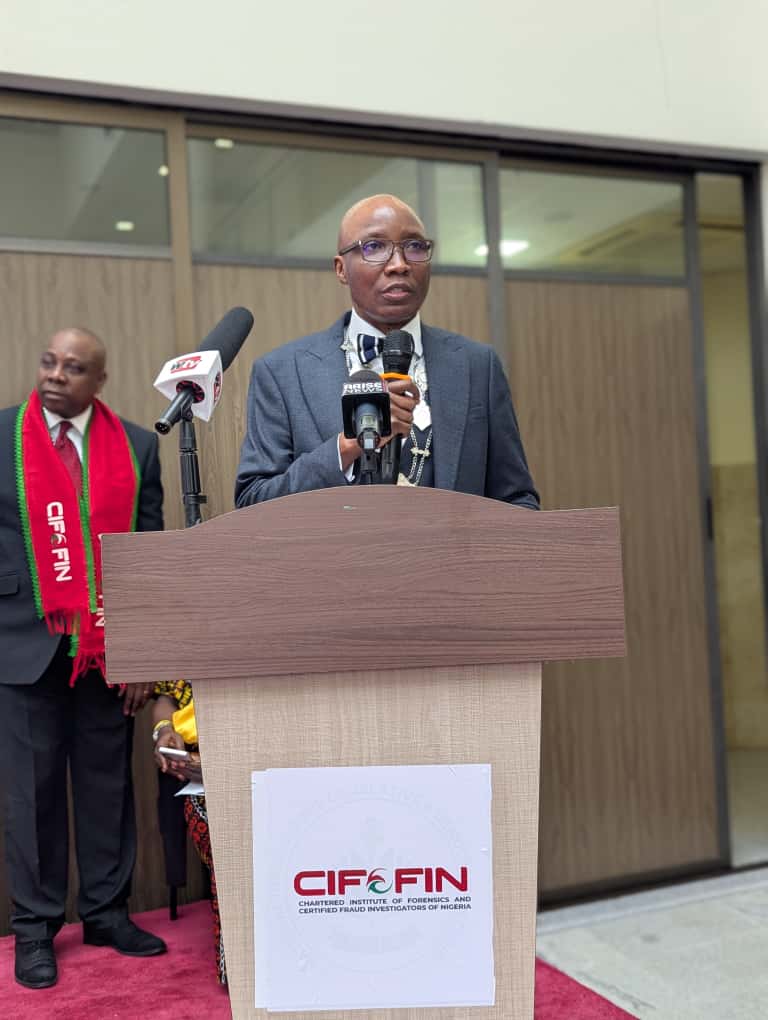
gentlemen, today we gather for the 14th Direct Membership Training Graduation Ceremony of the Chartered
Institute of Forensics and Certified Fraud Investigators of Nigeria (CIFCFIN). This occasion is more than
a graduation; it is a solemn reminder of the urgent duty that lies before every
forensic professional, to rebuild trust, accountability, and integrity in our
nation’s institutions. My address today is titled: “Plugging the Leakages: Why Nigeria Needs a Forensic
Performance Audit of the Maritime Sector.”
Nigeria is a maritime nation
blessed with over 853 kilometers of coastline and strategic seaports that should make us
the hub of West and Central African trade. With our natural location, Nigeria
ought to be competing with Singapore, Dubai, and Rotterdam as a global maritime
leader. Previous reports from the Nigerian Maritime Administration and Safety
Agency (NIMASA) estimate the untapped potential of Nigeria’s blue economy at
over $296 billion. Yet, instead of being a driver of prosperity, the sector has become a
symbol of lost opportunities, inefficiency, and deep-rooted corruption.
The facts are damning, and
some case studies illustrate the scale of the crisis:
Corruption
and Bribery: According to a report in the Punch Newspaper, corruption in the maritime
sector imposes an annual cost of over $204 million, with bribes inflating the cost of shipments
and frustrating genuine trade.
Port
Inefficiencies: The Guardian reports that outdated infrastructure, congested ports, and
sluggish cargo clearance processes cost Nigeria up to $7
billion
every year. Imagine what $7 billion could do for our economy if invested in
schools, hospitals, and infrastructure.
Neglect
of Shipyards: A 2025 Guardian report revealed that poor management and financial
neglect have left once-vital shipyards derelict, forcing Nigerian vessels to
seek costly repairs abroad. Billions of naira that should be circulating in our
economy now line the pockets of foreign operators. This is not only an economic
drain; it is an affront to our national pride.
Nigeria has also steadily lost dominance in marine
trade to foreign entities due to the absence of indigenous ships and shipyards.
As ThisDay and other reports show, foreign carriers dominate our waters, taking
jobs and revenue that rightfully belong to Nigerians. Today, the very arteries
of our maritime economy are controlled by outsiders because we failed to
protect and empower indigenous operators. Behind these failures are systemic
weaknesses: outdated laws, poor enforcement, inter-agency rivalries, and a lack
of modernization. Multiple initiatives by NIMASA, the Shippers’ Council, and successive
administrations have been launched, but the problems persist. Why?
Because we have been treating symptoms, not the disease.
That is why today, during
this occasion, the Institute is making an urgent national call: Nigeria must
undertake a comprehensive Forensic Performance Audit of the Maritime Sector.
This is not a recommendation, it is a necessity. Such an audit will expose the
true scale of corruption, quantify the hidden leakages, trace financial
malpractices, and hold enablers accountable. Without a Forensic Performance
Audit, we will continue to lose billions while neighbouring countries like
Ghana, Togo, and Benin Republic attract the shipping traffic and revenues that
should flow into Nigeria. We cannot allow our ports to remain choke points for
corruption and inefficiency while our economy bleeds.
Our message to the Federal
Government is clear: declare the maritime sector a priority for forensic
performance audit. Let transparency replace opacity. Let accountability replace
impunity. Let efficiency replace waste. And let Nigeria’s maritime sector finally
become the engine of growth it was destined to be.
To the graduating class,
this is where your calling as forensic professionals meets the urgency of the
national moment. The forensic lens is not just for financial statements and
fraud cases. It is for sectors like maritime, oil and gas, telecommunications,
banking, and construction, and much more where billions are lost every year.
You are being released today into a nation that needs you more than ever.
Distinguished participants,
as you graduate today as certified professionals and fellows, I want you to
have a better understanding/appreciation of what you have achieved for
yourselves and also for your families. From today, you are now “change
agents”
and “change makers” who are dully enlisted in the anti-corruption army
that will transform Nigeria into greatness. As certified professionals and
fellows, you have been equipped with the knowledge, tools, skills, and ethical
foundation necessary to make a positive impact on your communities and the
nation at large.
Finally, I wish also to
thank Prof. Abubakar O. Sulaiman, Director General of the National Institute
for Legislative and Democratic Studies, our hosts, my esteemed members
of the Governing Council, Chairman and Members of the Professional Training and Standards
Committee (PT&S), the Registrar and Staff of the Institute for their commitment,
dedication in serving the Institute and everyone else who made this event a
success.
Thank you.
Yerima (Dr.) I.B. Gashinbaki, FCCrFA, FCCFI
Founder/Pioneer President & Chairman, Governing
Council
25th September 2025
Enter your email and to join and stay updated with our newsletters and bulletin.